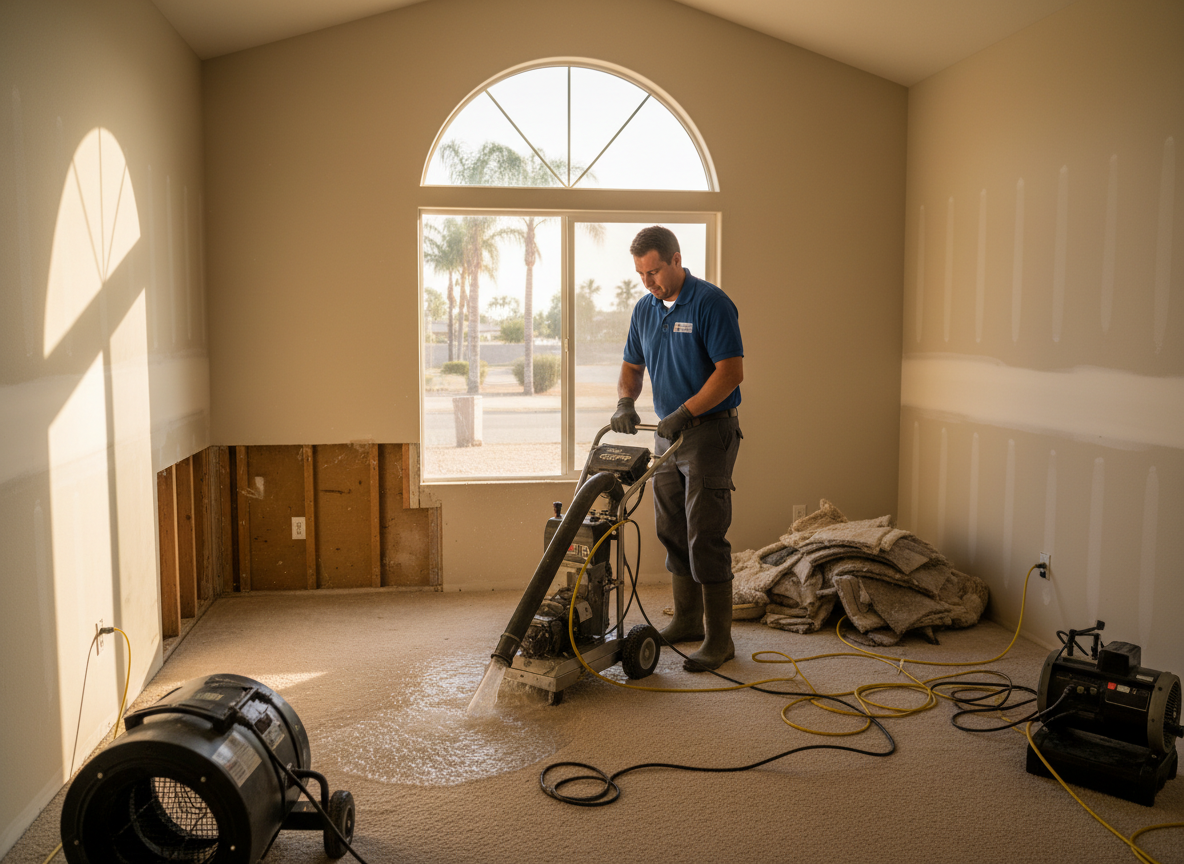
Newport Coast homes often sit on hillsides with slab foundations or raised floors that trap water after leaks from supply lines or coastal storms. Moisture moves quickly through stucco exteriors and into insulation, creating hidden pockets that standard fans miss. Technicians start with moisture meters and infrared scans to map affected zones before any tear-out, because pulling the wrong section wastes time and raises costs for owners.
Salt air along the California coast speeds corrosion on metal pipes and electrical boxes once water enters walls. Older stock built before updated building codes frequently has single-layer drywall that saturates fully, requiring full replacement rather than spot repairs. Crews use negative-air machines during demolition to keep particles from spreading into living spaces, then run commercial dehumidifiers sized for the square footage until readings drop below 15 percent moisture content.
After extraction, the focus shifts to preventing secondary mold growth in the humid marine layer that lingers even in winter. Technicians remove baseboards and drill weep holes at the base of walls to allow airflow, then monitor with daily readings for three to five days. This step-by-step approach keeps insurance claims moving and prevents repeat visits that occur when drying is rushed.
Technician insight
In California, the thing that catches most people out with water damage restoration near me is how salt air along Newport Coast accelerates hidden corrosion inside walls once water reaches metal pipes or boxes. Homeowners often stop at visible puddles and miss the slow migration through stucco that turns a small leak into full wall replacement weeks later.
Slab leak under coastal home
Water appeared along baseboards in a Newport Coast residence after a slab supply line failed. Scans showed saturation extending under the living room floor and into an adjacent wall. Extraction and targeted drying ran for four days until readings stabilized. The homeowner avoided mold growth and full floor replacement.
How it works
- 1
On-site assessment
Technicians arrive within hours, map moisture with meters and cameras, and document all affected materials for the homeowner and insurer.
- 2
Water extraction
Submersible pumps and wand extractors remove standing water from floors and cavities while protecting unaffected areas.
- 3
Drying and monitoring
Air movers, dehumidifiers, and daily moisture checks continue until structural readings return to normal levels.
- 4
Restoration handoff
Removed materials are replaced and surfaces prepared for any final repairs the homeowner schedules.
Pricing
Upfront quotes follow on-site assessment; final cost reflects affected square footage, drying duration, and materials removed.