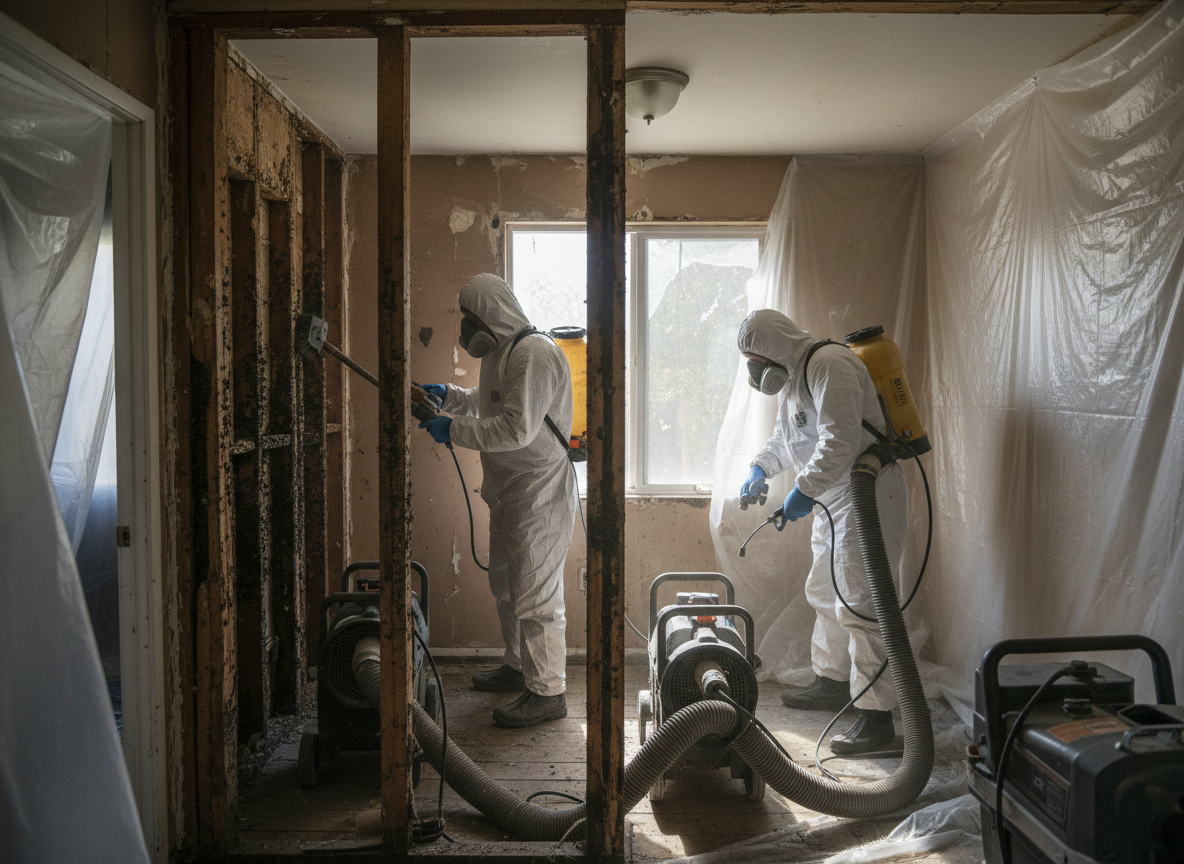
Mold remediation after water damage in Newport Coast requires careful attention to the way moisture lingers in stucco and drywall assemblies common to homes built along the coast. Technicians must map the full migration path of water, often through attic insulation and underfloor cavities, because trapped humidity from Pacific air keeps spores active long after the initial leak is stopped. Removing only visible growth leaves roots in place that can reappear within weeks when temperatures rise.
Edge cases appear frequently in older Newport Coast residences where original plumbing lines run through exterior walls without proper vapor barriers. These installations allow condensation to form behind cabinets and vanities, creating colonies that standard air sampling can miss. Containment protocols must isolate HVAC returns immediately to prevent spores from circulating through the entire structure, especially in multi-level homes where upper-floor leaks drain downward through shared wall cavities.
California building codes require documentation of moisture levels before and after treatment, and any porous materials that remain saturated beyond 48 hours must be removed rather than dried in place. Homeowners often attempt DIY drying with box fans, which spreads spores into living spaces and complicates later professional work. Proper remediation includes HEPA vacuuming of all hard surfaces and disposal of affected carpet padding and baseboards that cannot be salvaged without risk of recurrence.
Technician insight
In California, the thing that catches most people out with Mold remediation after water damage is how coastal humidity in Newport Coast keeps wall cavities damp for months after a small leak, especially in homes where stucco meets wood framing without adequate flashing.
Attic Mold Following Roof Leak
Water entered through a compromised roof flashing in a Newport Coast residence and soaked insulation above the master bedroom. Inspection revealed black mold colonies spreading along rafters and into HVAC ductwork. Affected insulation was removed, framing treated, and the system dried under containment before new insulation was installed.
How it works
- 1
Initial Assessment
Technicians arrive within hours to locate the water source, document affected materials, and map moisture migration through walls and ceilings using meters and infrared imaging.
- 2
Containment Setup
Plastic barriers and negative air machines isolate the work zone so spores cannot travel through HVAC systems or into unaffected rooms.
- 3
Material Removal
Saturated drywall, insulation, and trim are cut out and bagged for disposal while antimicrobial agents are applied to exposed framing.
- 4
Drying and Clearance
Industrial dehumidifiers and air movers bring moisture content to safe levels, followed by post-remediation testing before any reconstruction begins.
Pricing
Cost depends on square footage affected, depth of hidden growth, and whether HVAC components require cleaning; upfront quotes provided after inspection.