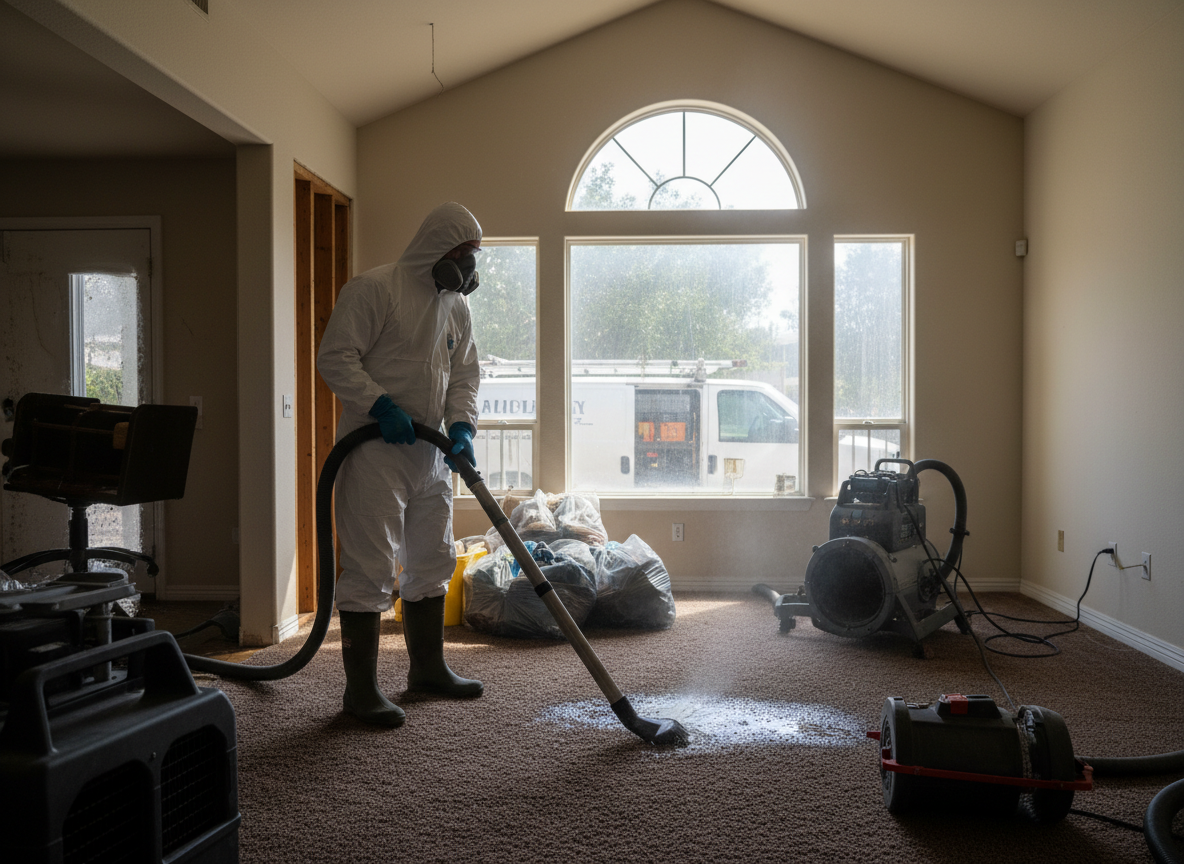
Newport Coast homes built on steep slopes above the Pacific often see water enter through foundation cracks or lower-level garages when winter rains hit hard. We extract standing water, then use moisture meters to map how far saturation has traveled into drywall, subfloors, and insulation. Coastal humidity slows drying, so we run industrial dehumidifiers longer than inland crews typically need to prevent hidden mold behind baseboards.
Many properties here date to the 1980s and 1990s with stucco exteriors over wood framing that traps moisture once floodwater rises above the weep screed. We remove and replace affected sections rather than drying in place because trapped salt from ocean spray accelerates corrosion on metal lath. Electrical outlets near slab level are checked first since groundwater can short circuits days after visible water is gone.
Orange County building codes require permits for any structural drying that affects load-bearing walls, and we coordinate those filings so homeowners avoid stop-work notices. After extraction we document every step with photos and moisture logs for insurance adjusters who know Newport Coast terrain creates repeat claims on the same lots.
Seasonal Flood Patterns in Newport Coast
Winter storms dump several inches in a single night on already saturated slopes, sending mud and debris into lower-level rooms. We stage containment barriers at driveways to keep sediment from entering neighboring properties downhill.
Common Hidden Damage
Salt-laden water from Pacific spray corrodes rebar in concrete slabs faster than fresh water, so we test for elevated chloride levels before any reconstruction begins.
Technician insight
In California the thing that catches most people out with flood restoration services is how quickly salt from ocean spray gets pulled into stucco and drywall on Newport Coast hillsides. Once that happens you cannot just dry the wall; the salt will keep pulling moisture back in and corrode the metal lath. Homeowners often try fans from the hardware store for a week and then discover the job just doubled because the framing now needs replacement.
Hillside Garage Flood After Heavy Rain
Water entered a 1992 Newport Coast home through the garage slab joint during a December storm. We found saturation had wicked two feet up the drywall and into the adjacent laundry room. Extraction and targeted wall removal stopped further migration into the kitchen subfloor. The home was dried and documented within five days, allowing the owner to start permitted repairs without hidden mold later.
How it works
- 1
Emergency Assessment
Arrive on site within hours, locate entry points, and measure moisture across all affected levels.
- 2
Water Extraction
Remove standing water and pump out saturated soil against foundations before it migrates further.
- 3
Drying and Monitoring
Place air movers and dehumidifiers, then check readings daily until levels match unaffected areas.
- 4
Sanitizing and Documentation
Apply antimicrobial treatments where needed and compile full moisture and photo records for insurance.
- 5
Rebuild Coordination
Remove damaged materials and hand off to licensed contractors for permitted repairs.
Pricing
Pricing varies by water volume, number of affected rooms, and whether slab or wall cavities require opening; we provide upfront written estimates before work begins.