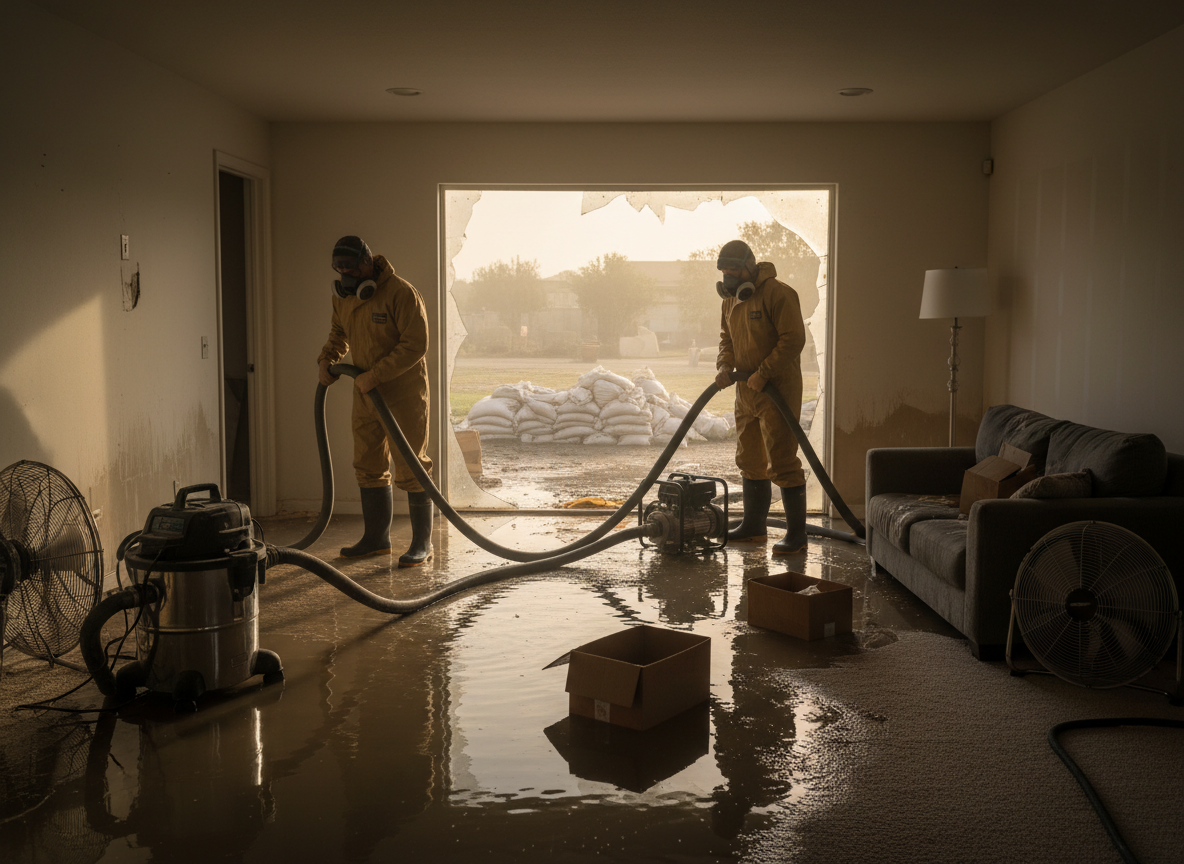
Balboa Island homes sit on narrow lots with canal frontage and many date to the 1920s through 1950s. When a pipe bursts or a king tide pushes water under the crawl space, extraction crews must work around tight alleys and limited parking. Our trucks stage at the Marine Avenue lot and carry smaller wands and portable pumps suited to these access constraints.
Winter storms and high tides regularly affect the island's fill soil. Water migrates under raised foundations and into the older plaster walls common on streets like Park Avenue and Agate. Technicians document moisture levels room by room before drying begins so hidden pockets behind built-in cabinetry are not missed.
Residents on the island call for help after sewage backups from overloaded storm drains or after roof leaks during coastal fog events. Response teams cross the bridge from the mainland and set up containment before the tide turns again.
Around Balboa Island
We regularly work near:
- 📍Balboa Island Ferry landing
- 📍Marine Avenue
- 📍Park Avenue
- 📍Agate Avenue
- 📍The Little Bridge
- 📍Newport Bay shoreline
Water Damage Restoration Newport Coast in Balboa Island — Local Notes
- •Canal-side homes on Balboa Island often have shallow crawl spaces where tidal water collects; crews use low-profile dehumidifiers that fit through standard basement doors.
- •Narrow one-way streets such as Park Avenue require equipment to be hand-carried from the nearest legal parking spot, extending setup time on every job.
- •Many 1930s cottages were built on bay fill; moisture travels laterally under slab additions, so infrared scans are run along interior walls before drying equipment is placed.
- •Winter king tides combined with rain push water into garage floors on the south side of the island; pumps must discharge directly into the bay to avoid overloading the storm drains.