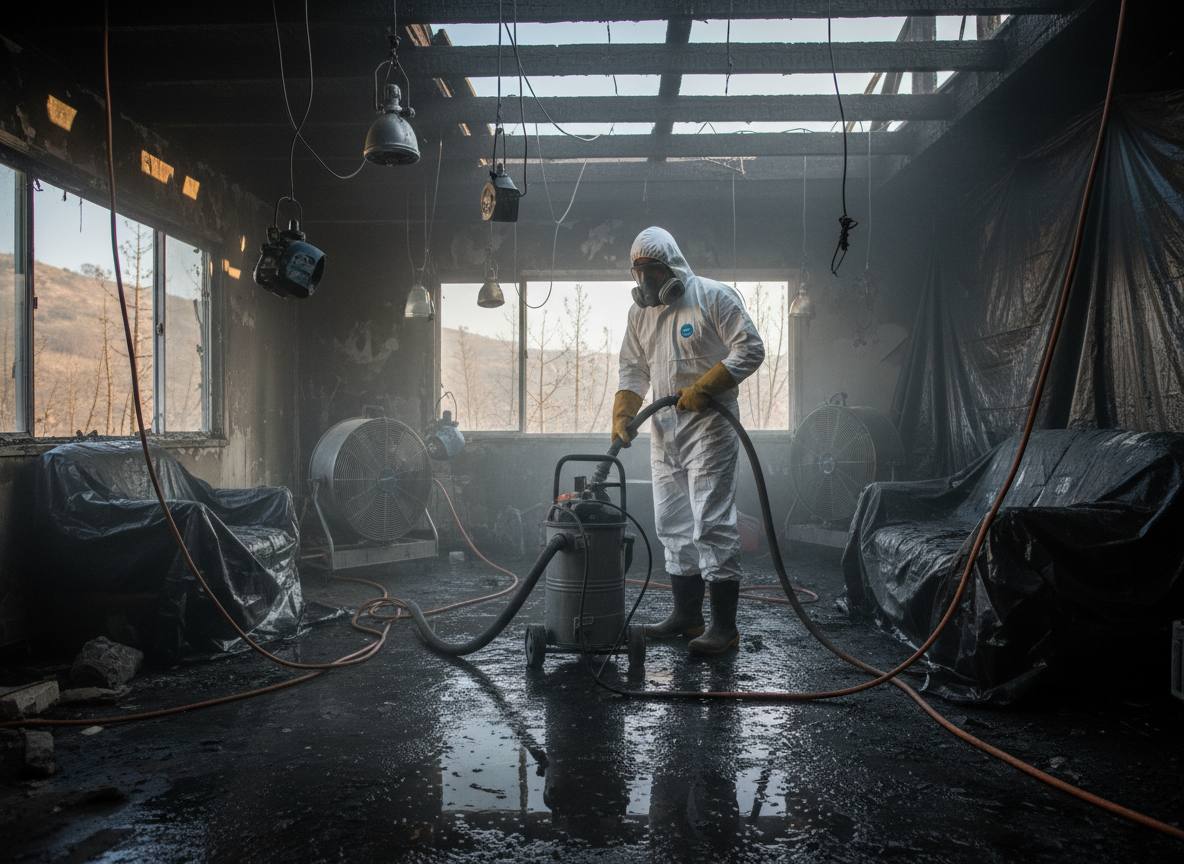
Newport Coast homes often feature drywall over wood framing and tile or hardwood floors that trap moisture after firefighters use high-volume hoses. Once winter rains arrive in the California area, residual water from suppression mixes with salt-laden air and creates hidden mold behind baseboards and in wall cavities that standard drying fans miss. Remediation crews must remove affected drywall sections, treat charred framing with antimicrobial agents, and run commercial dehumidifiers for days longer than inland jobs because coastal humidity hovers near 70 percent even in cooler months.
Soot from structure fires bonds to porous materials like carpet padding and insulation, releasing odors when moisture reactivates the particles. In Orange County coastal neighborhoods, older residences built before 1990 frequently lack modern vapor barriers, allowing water to migrate into stucco-clad exteriors and under tile roofs. Technicians test moisture levels with pin meters at multiple depths, document hidden saturation along plumbing chases, and coordinate with local building departments when structural members require replacement to meet current fire-code standards.
Edge cases include electrical systems compromised by conductive soot and water that can arc days after the initial event. Crews isolate circuits, remove and clean or replace outlets and switches, and verify grounding before restoring power. Because Newport Coast sits on sloping terrain near the Pacific, gravity can pull water into lower-level garages and crawl spaces that require targeted extraction and positive drainage solutions to prevent recurring issues.
Technician insight
In Newport Coast the thing that catches most people out with water damage remediation after fire is how ocean humidity keeps drywall and insulation wet for weeks in homes built before modern vapor barriers, letting hidden mold take hold along the coast-facing walls even after the fire is out.
Suppression Water in a Newport Coast Hillside Home
A structure fire sent water through ceilings and into a lower-level family room. Inspection found saturated insulation and soot in HVAC returns. Crews extracted water, removed affected drywall sections, and ran drying equipment for nine days until readings stabilized. Final odor sealing and reconstruction restored the space without recurring moisture issues.
How it works
- 1
Initial Assessment
Technicians arrive within hours, document visible char and water migration, and use moisture meters to map affected zones in Newport Coast homes.
- 2
Water Extraction
High-capacity pumps and wands remove standing water from suppression efforts before it migrates into subfloors or wall cavities.
- 3
Soot and Residue Removal
HEPA vacuums and specialized cleaners lift bonded soot from surfaces while protecting HVAC systems from cross-contamination.
- 4
Drying and Monitoring
Industrial air movers and dehumidifiers run until pin-meter readings confirm dry conditions, with daily logs kept for insurance purposes.
- 5
Final Restoration
Rebuild drywall, replace insulation, and apply odor-sealing primers once structural drying is complete and verified.
Pricing
Upfront quotes after inspection; cost driven by square footage affected, depth of water penetration, and whether electrical or HVAC components require cleaning.