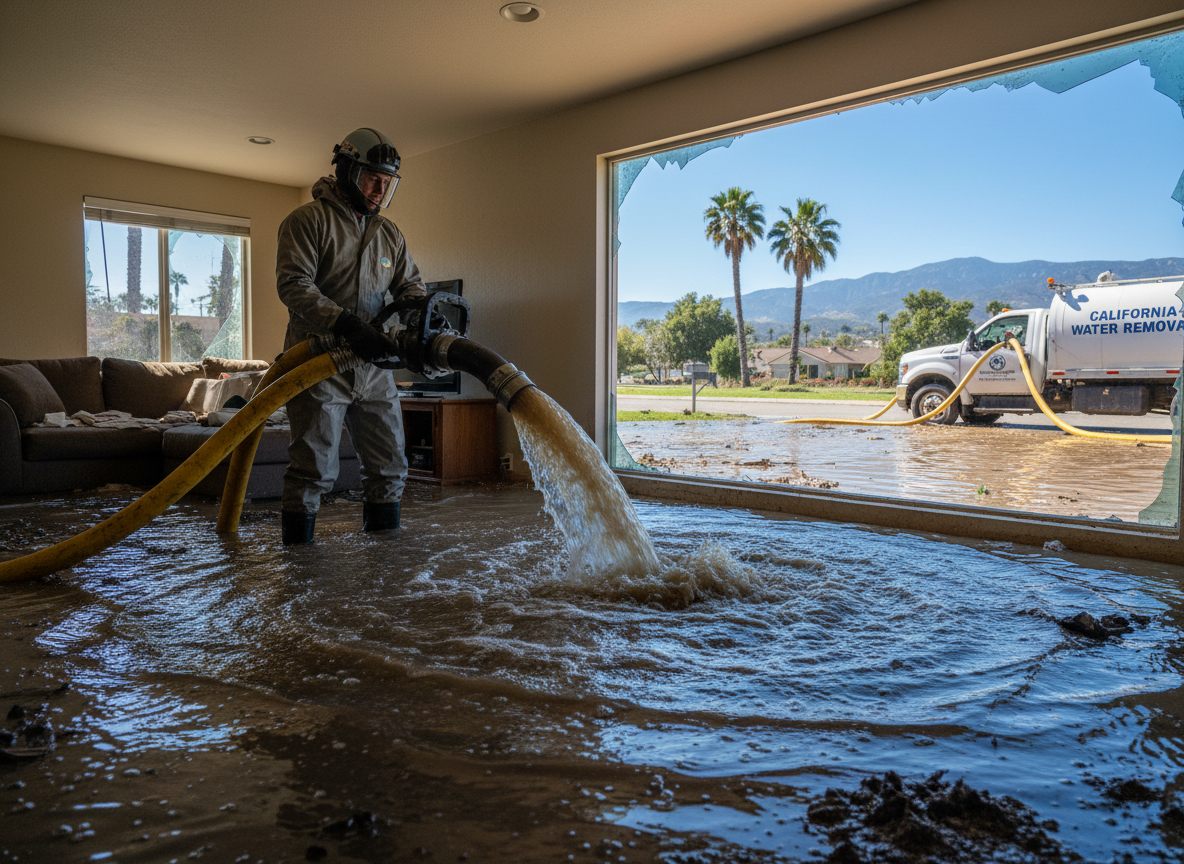
Rapid water extraction targets pooled water on floors and in cavities before it migrates into subfloors or wall cavities common in Newport Coast coastal builds. Technicians use truck-mounted units with high-CFM extraction to pull water from carpet pads and hardwood seams where California humidity slows natural drying. Delaying this step lets salts from ocean-influenced moisture corrode metal fasteners inside older framing.
Edge cases include water trapped behind built-in cabinetry or under tile in bathrooms where slab-on-grade construction in the area limits access points. Extraction crews must cut strategic weep holes without compromising load-bearing elements, especially in homes near steep coastal terrain that can channel runoff toward foundations during heavy winter rains. Over-extraction risks pulling loose fill from crawl spaces typical in hillside Newport Coast lots.
Code considerations arise when extraction disturbs electrical outlets or HVAC returns in wet zones; crews isolate power before starting to avoid shorts that could affect neighboring units in shared-wall California residences. Monitoring moisture meters throughout the process confirms when hidden pockets drop below 15 percent, preventing secondary mold growth that thrives in the region's mild temperatures.
Technician insight
In California, the thing that catches most people out with Rapid water extraction is how quickly coastal fog keeps moisture levels high after the initial pump-out, especially in Newport Coast homes built on slopes where runoff re-enters through foundation cracks days later.
Kitchen Leak Migration
A supply line failure sent water across a Newport Coast kitchen and into the adjacent family room subfloor. Extraction crews mapped the path under hardwood and pulled several hundred gallons before it reached the lower-level bedroom. Follow-up meter checks confirmed dry cavities, avoiding the need to open walls.
How it works
- 1
Site Assessment
Technicians arrive within the hour, map water migration paths through the property, and identify hidden pockets in walls or under flooring.
- 2
Power Isolation
Electrical circuits in affected zones are shut off to prevent hazards before any equipment enters the space.
- 3
Standing Water Removal
High-volume extractors pull surface water into containment tanks while smaller wands reach under cabinets and into corners.
- 4
Moisture Verification
Infrared scans and pin meters confirm remaining saturation levels before drying equipment is placed.
Pricing
Cost depends on water volume, access difficulty, and square footage affected; upfront quotes provided on site.