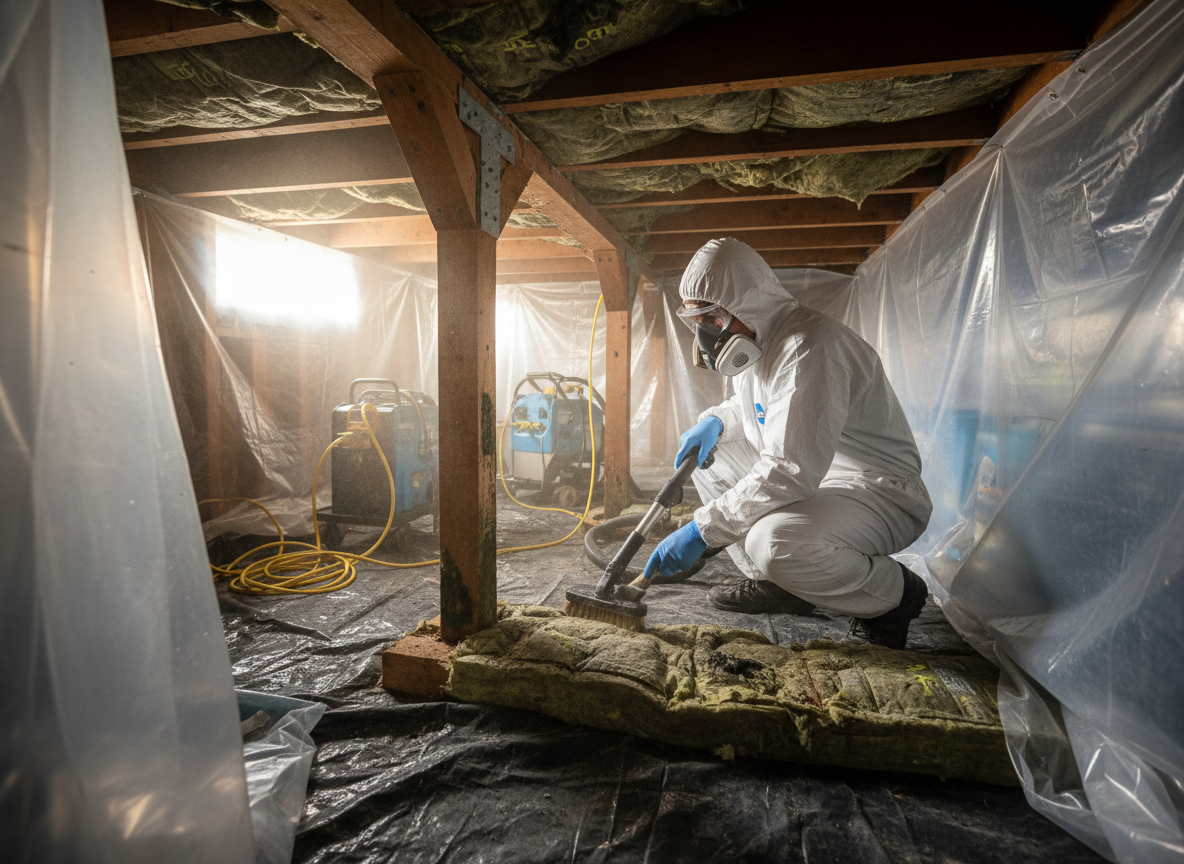
Newport Coast homes built on the hillsides above the Pacific often sit on clay-heavy soils that hold water after winter rains. When crawl spaces lack proper vapor barriers, this moisture migrates upward and feeds mold on joists and insulation. Technicians start by isolating the space with containment and running commercial dehumidifiers to drop relative humidity below 50 percent before any removal begins.
Access in these properties is frequently limited by low clearances and plumbing runs added during 1990s renovations. Mold on rim joists near the foundation wall requires HEPA vacuuming followed by antimicrobial treatment that will not off-gas into living areas above. Crews also check for hidden growth behind HVAC ducts that run through the crawl space, a common path for spores to reach bedrooms.
After physical removal, the focus shifts to preventing recurrence. Installing a sealed vapor barrier and adding a small exhaust fan tied to a humidity sensor addresses the constant marine layer that rolls in most evenings. Without these steps, mold returns within a single rainy season because the coastal air never stays dry long enough for natural drying.
Seasonal Considerations
Winter storms bring the heaviest moisture load, while summer fog keeps relative humidity elevated even when rain stops. Homeowners in Corona del Mar and Crystal Cove see the same pattern because the same marine air mass affects both neighborhoods.
Technician insight
In Newport Coast the thing that catches most people out with crawl space mold removal is the constant marine layer that keeps soil moisture high even in summer. Homeowners think once the rain stops the space will dry, but the clay under these hillside lots holds water against the foundation for months. Skipping the vapor barrier upgrade means the job repeats every winter.
Hillside Home Near Newport Coast Drive
After heavy winter rain, a homeowner noticed musty air coming from floor vents. We found black mold along the rim joists where the crawl space met the hillside foundation. Containment was set, wet insulation removed, and a sealed vapor barrier plus exhaust fan installed. The space stayed below 45 percent humidity through the next foggy season.
How it works
- 1
Inspection and Containment
Technicians enter through existing access panels or create a sealed entry point, then set up plastic barriers to keep spores from reaching the living space.
- 2
Moisture Removal
Industrial air movers and dehumidifiers run until wood moisture content drops below 15 percent, measured at multiple joist locations.
- 3
Mold Extraction
HEPA vacuums and wire brushing remove visible growth from framing; affected insulation is bagged and removed from the property.
- 4
Antimicrobial Application and Drying
EPA-registered treatments are applied to wood surfaces, followed by continued drying and a final humidity check before barriers come down.
- 5
Barrier and Ventilation Upgrade
A new vapor barrier is sealed to the foundation walls and piers, and a humidity-controlled fan is installed to maintain dry conditions.
Pricing
Cost depends on square footage, depth of mold into wood, and whether insulation must be replaced.