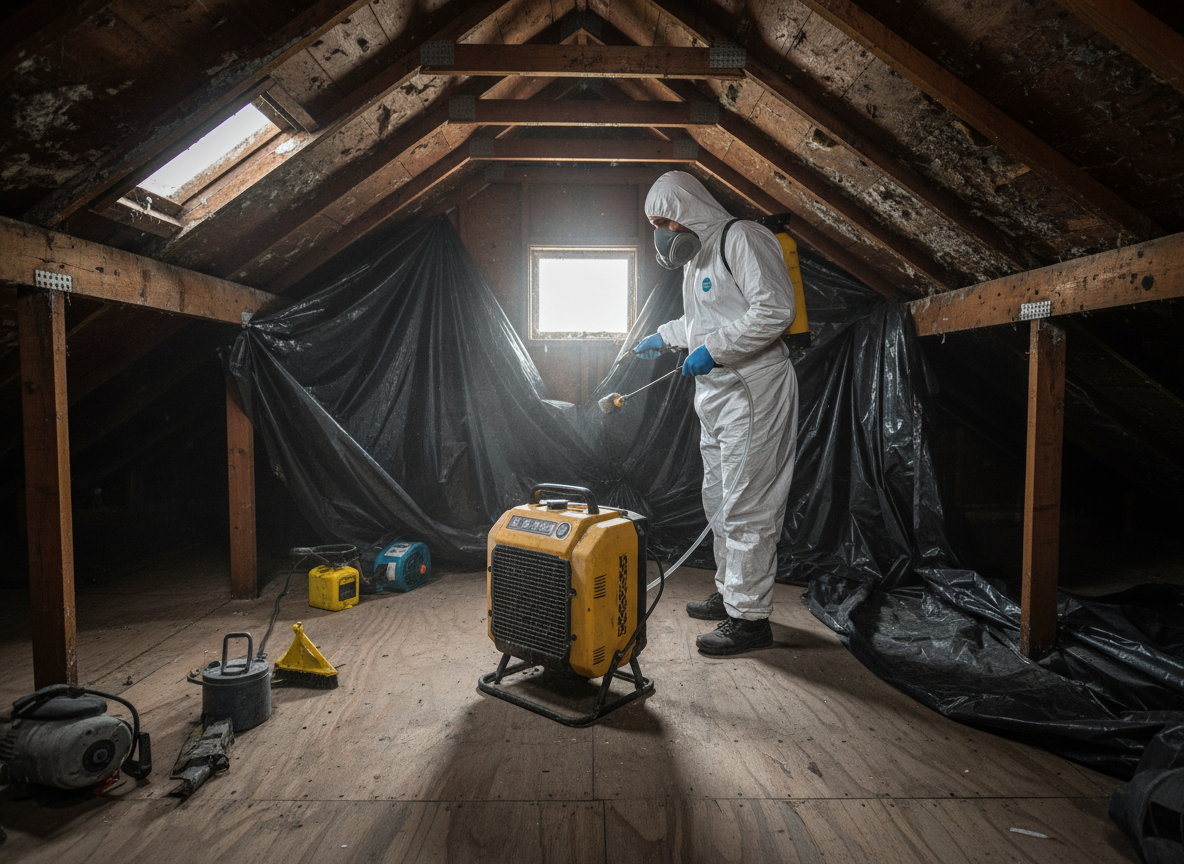
Newport Coast homes often feature older tile roofs and vented attics that trap moist marine air, allowing mold to colonize insulation and rafters after even small roof leaks. Technicians remove affected fiberglass batts and spray-foam sections, then treat wood members with EPA-registered antimicrobials while maintaining negative pressure to keep spores out of living spaces. Access through narrow scuttle holes or knee-wall openings requires portable scaffolding and headlamps, and crews document every step with photos for insurance adjusters who frequently visit coastal properties after winter storms.
Edge cases appear when mold reaches HVAC ducts routed through attics; these must be sealed, cleaned or replaced to prevent spores from recirculating into bedrooms below. Local building codes require permits for any work that disturbs load-bearing roof structures, so remediation plans include coordination with Orange County inspectors. Homeowners sometimes attempt DIY bleach cleaning, which fails on porous wood and leaves roots intact, leading to rapid regrowth once humidity returns in spring.
After source removal, dehumidifiers run until relative humidity in the attic drops below 50 percent, verified with data-logging meters placed at multiple points. Final clearance includes surface sampling sent to an independent lab and a written report that satisfies most Newport Coast HOA requirements before homeowners can close insurance claims.
Technician insight
In California, the thing that catches most people out with attic mold remediation is how quickly salt-laden air from the Newport Coast shoreline corrodes metal HVAC components and fasteners, letting moisture reach new wood surfaces and restarting the growth cycle within a single rainy season.
Hidden growth after roof leak
A Newport Coast homeowner noticed ceiling stains after winter rains. Inspection found active mold on rafters and insulation above the master bedroom. Crew removed contaminated materials, treated framing, sealed ducts, and dried the space to lab-cleared levels before reinstalling insulation.
How it works
- 1
Initial Containment and Assessment
Crew arrives within hours, sets up plastic barriers at attic access points, and uses moisture meters plus borescopes to map all affected areas without disturbing settled spores.
- 2
Source Removal
Remove and bag contaminated insulation, drywall if needed, and any soft materials; treat exposed wood and sheathing with antimicrobial solutions.
- 3
Drying and Verification
Run commercial dehumidifiers and air movers until readings confirm dry conditions, then collect post-remediation samples for lab analysis.
- 4
Final Documentation
Provide detailed report with photos, moisture logs, and lab results for insurance and HOA records before restoring attic access.
Pricing
Pricing varies with attic size, mold extent, and whether HVAC cleaning is required; upfront quote follows on-site inspection.