2026-10-14 ·
Why Newport Coast Humidity Speeds Up Mold After A Leak
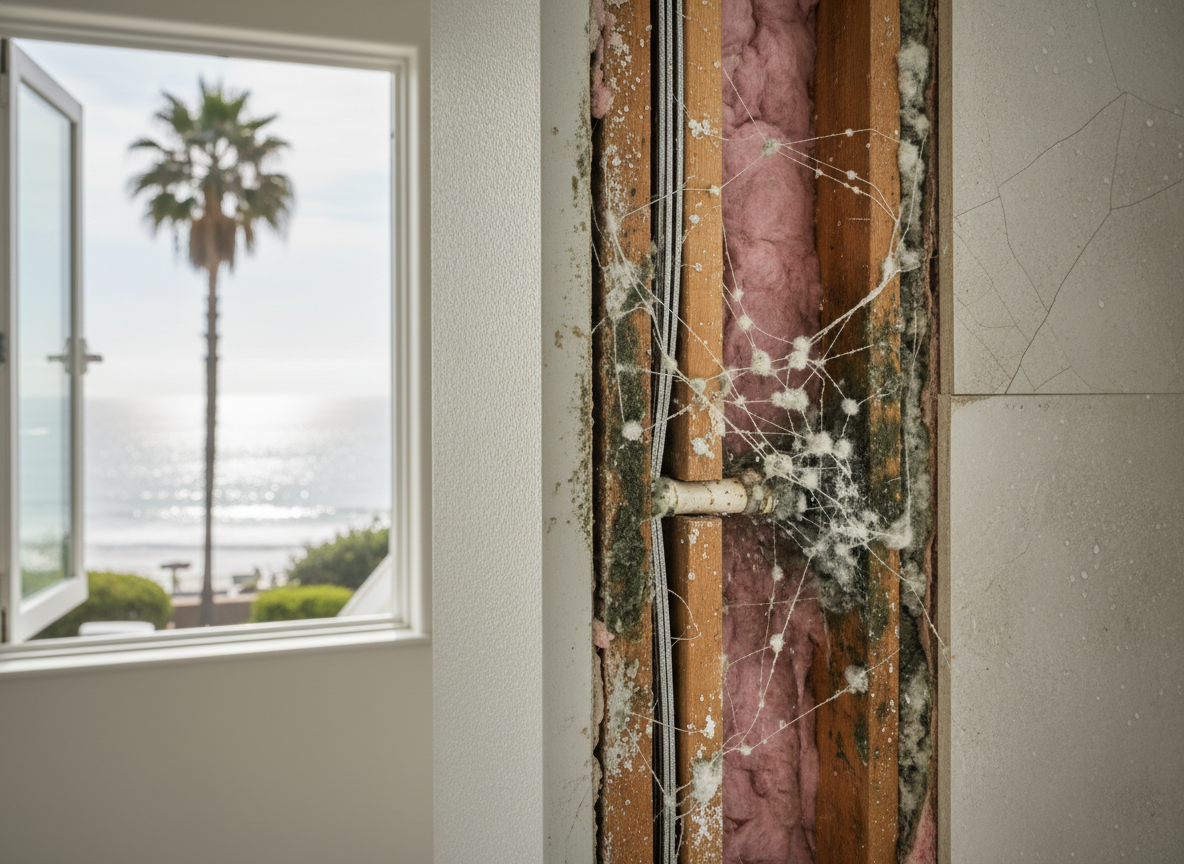
Newport Coast humidity levels between 65 and 85 percent let mold begin growing on wet drywall or wood within 24-48 hours after a leak. Coastal marine layers keep moisture trapped inside homes longer than inland spots, shortening the safe drying window compared to drier California regions.
Coastal Humidity and Mold Timelines
Newport Coast sits right on the Pacific where the marine layer rolls in most mornings and holds relative humidity high through the afternoon. This persistent moisture means a small pipe leak behind a wall can reach the 60 percent surface moisture threshold mold needs in under two days. Homeowners in neighborhoods like Pelican Hill and Spyglass Hill often see black spots on baseboards by day three if extraction is delayed. The same leak in a drier inland county might stay safe for four or five days. Once spores settle into cellulose materials common in local stucco-and-wood construction, they double every 24 hours when humidity stays elevated.
How Local Housing Stock Changes Drying Speed
Many Newport Coast homes built from the 1980s onward use gypsum board over wood framing with limited crawl-space ventilation. When water migrates into these cavities the thick coastal air slows evaporation even with windows open. Concrete slab foundations common along Newport Coast Drive trap moisture underneath flooring, feeding hidden colonies for weeks. Older remodels in Crystal Cove add layers of tile and underlayment that further seal in dampness. These construction details turn a one-hour leak into a multi-day mold risk that requires targeted dehumidification rather than simple fans.
Seasonal Patterns That Shorten Safe Response Time
Winter storms bring the heaviest marine layer events, pushing humidity above 80 percent for days at a time while temperatures stay mild enough for mold to thrive. Summer fog keeps overnight readings high even when daytime sun appears. After heavy rain events documented in nearby Laguna Beach and Corona del Mar, groundwater seepage through retaining walls adds another moisture source that humidity then locks in place. Property owners who wait until visible signs appear often face larger remediation because the 48-hour clock started the moment water first contacted framing.
Practical Steps After Discovering a Leak
Shut off water at the source and document the affected area with photos before any cleanup begins. Remove standing water immediately, then run commercial dehumidifiers set to 45 percent relative humidity until moisture meters read below 15 percent on all surfaces. Open interior walls at least 12 inches past visible water lines so air can reach cavities. Check adjacent rooms because coastal homes often share HVAC returns that spread spores quickly. For persistent issues in crawl spaces or attics, professional assessment prevents hidden growth from migrating into living areas.
Homeowners facing repeated leaks near foundations can review common irrigation problems in the article Spotting Irrigation Leaks Around Newport Coast Foundations. Those dealing with storm-related water should also read What To Check After Heavy Rain In Newport Coast. When mold has already appeared, mold remediation after water damage and water leak restoration teams familiar with local conditions provide the fastest path to safe indoor air.